
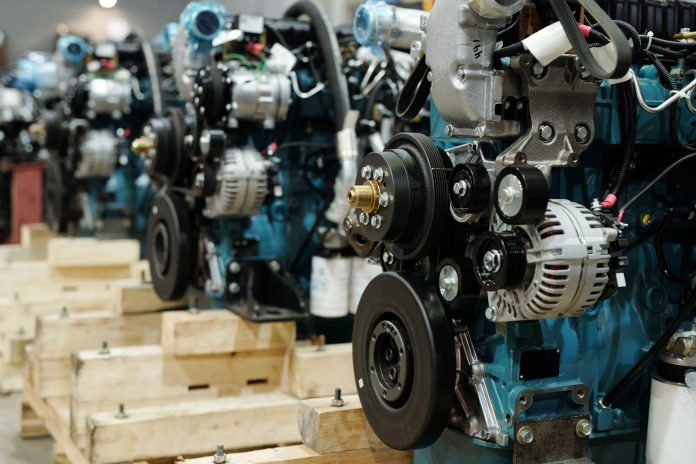
Your engine just failed. Maybe the head gasket blew on your Subaru Outback. Maybe the timing chain guides disintegrated in your Nissan Altima. Whatever happened, the diagnosis is the same: the repair cost exceeds what makes sense for the car’s value, but the car itself is structurally fine. You’re not ready to take on a $500 monthly payment for something new. So you need a replacement engine, and you need to pick between two fundamentally different sourcing strategies.
The remanufactured route and the JDM import route solve the same problem. They solve it differently, at different price points, on different timelines, and with different risk profiles. Understanding where each one wins and where it falls short is the only way to make a decision you won’t regret six months later.
What remanufactured actually means
A remanufactured engine is a used core that’s been disassembled, machined to factory tolerances, fitted with new wear components (bearings, rings, seals, gaskets), and reassembled. The result is, in theory, an engine that performs like a new unit. Jasper Engines, ATK, and LKQ are among the largest reman suppliers in the U.S., and their products come with warranties that typically range from 12 months to 3 years depending on the application.
The appeal is obvious: known specifications, domestic warranty support, and a product that comes from within the existing supply chain. Dealerships and franchise repair shops default to reman because the liability is clear. The engine is documented. The warranty has a corporate entity behind it.
But the cost reflects all of that infrastructure. A remanufactured four-cylinder engine for a common Honda or Toyota platform typically runs $2,500 to $4,500 for the long block alone. V6 and V8 platforms climb to $4,000 to $7,000. Add $1,500 to $3,000 in labor, and the total repair bill can approach or exceed the vehicle’s market value.
What a JDM import offers instead
A JDM engine is a used unit pulled from a vehicle in Japan, typically with mileage under 60,000 to 80,000 miles, and imported without the reman process. No machining. No new internals. The original components are still in place, which means the engine’s condition depends entirely on how it was maintained and how it was tested before sale.
Pricing sits significantly lower. A JDM K24A for a Honda CR-V or Accord might cost $1,200 to $1,800 from a reputable supplier. A 2AZ-FE for a Camry runs $1,000 to $1,500. The official site of Texas JDM Motors lists engines across most Japanese makes with transparent pricing and documented mileage, and the cost difference against a reman unit is typically 40% to 60%.
That savings is real, but it comes with a different risk profile. The engine hasn’t been rebuilt. It’s been inspected, compression tested, and warranted for a shorter period (usually 30 to 90 days versus 12 to 36 months on a reman). You’re buying residual life rather than reset life.
Where reman wins
If you’re keeping the vehicle for another 100,000 miles and the repair budget allows for it, reman is the safer long-term bet. The machined surfaces, new bearings, and fresh seals reset the wear clock. A well-built reman engine from Jasper or a reputable machine shop should deliver performance comparable to the original for the expected service life of the vehicle.
Reman also wins when the engine platform has known design weaknesses. Subaru’s EJ255 head gasket failures and Nissan’s QR25DE timing chain issues are examples where simply replacing the engine with another used unit of the same design means inheriting the same flaw. A reman shop can address those weaknesses during the rebuild, using updated gaskets, revised tensioner guides, or improved valve seal materials. The same logic applies to Ford’s 5.4L Triton with its cam phaser issues or GM’s AFM lifter failures; the rebuild process corrects what the factory got wrong.
Where JDM imports win
For vehicles in the second half of their useful life, JDM is the rational economic choice. A 2010 Altima with 160,000 miles on the chassis isn’t a candidate for a $5,000 reman plus $2,500 in labor. But a $1,300 JDM QR25DE with 45,000 miles and a $1,800 install? That math works. The car stays on the road for another 60,000 to 80,000 miles, which is three to five more years of reliable transportation for under $3,500 total.
Speed is the other advantage. Reman engines have lead times. Jasper typically quotes 5 to 10 business days for common applications, longer for less common ones. Some machine shops take two to four weeks for a full rebuild. JDM suppliers with warehouse inventory can ship within 24 to 48 hours, which means the car is back on the road a week or more sooner.
For shops running a business around engine replacement, that turnaround matters. A bay occupied by a car waiting for a reman engine is a bay not generating revenue on the next job. JDM supply compresses the cycle time and frees capacity.
Availability is another factor that tilts toward JDM for certain platforms. Try ordering a reman 1UZ-FE for a Lexus LS400 or a 13B-REW for an RX-7. The wait list stretches into months, and some reman shops won’t touch rotary engines at all. JDM importers, by contrast, stock these niche platforms because they specialize in the Japanese market where those engines were produced in volume.
The variables that actually determine the right choice
Vehicle age and value are the primary inputs. If the vehicle is worth $15,000 or more and you plan to keep it, lean toward reman. If the vehicle is worth $3,000 to $8,000 and you need it running for a few more years, JDM makes more financial sense.
Warranty tolerance matters too. Some owners need the assurance of a 3-year reman warranty. Others are comfortable with a 60-day JDM warranty because the cost difference funds a contingency budget if something goes wrong. Neither preference is wrong. They reflect different relationships with financial risk.
The mechanic’s preference carries weight as well. Shops that have installed hundreds of JDM engines know the failure rates, know which suppliers deliver consistent quality, and price their labor accordingly. A shop that has never handled a JDM import will charge more in diagnostic time alone than the engine cost difference saves.
Both paths lead to the same destination: a running vehicle. The question isn’t which option is better in the abstract. It’s which one aligns with your car’s remaining value, your budget constraints, and your timeline. Answer those three variables honestly, and the decision makes itself. The owners who end up frustrated are the ones who chose reman when they couldn’t afford it or chose the cheapest JDM listing when reliability mattered more than the sticker price. Match the solution to the situation, not to the marketing.

