
Martial Arts Exercises for Speed and Discipline
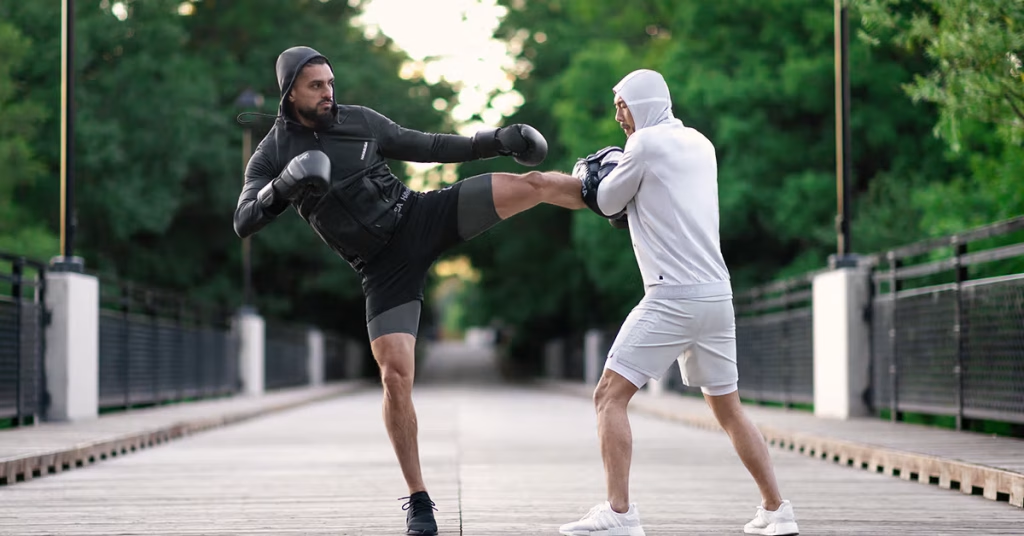
A slow fighter learns the hard way. Timing punishes hesitation before strength ever gets a chance to matter. Martial Arts Exercises are not about looking tough in the mirror or copying movie-style kicks across a padded floor. They train your body to move when your mind gives the order, then train your mind to stay calm when your body wants to rush.
Across the USA, more adults and teens are walking into dojos, boxing gyms, taekwondo schools, jiu-jitsu academies, and community recreation centers for the same reason: they want more control. Not only fitness. Not only self-defense. Control over reaction, breath, balance, patience, and pressure.
Good training does not need to be fancy. A small garage space in Ohio, a school gym in Texas, or a backyard mat setup in Arizona can build serious skill when the work is planned well. You can also study trusted training resources to sharpen your practice habits outside class. The real goal is simple: move faster without getting sloppy, stay disciplined without becoming stiff, and build a body that listens under pressure.
Martial Arts Exercises That Build Fast Feet and Clean Movement
Speed starts at the floor. Many beginners chase faster punches or higher kicks before they can shift weight without leaking balance. That is like trying to drive a sports car on loose gravel. The engine may be strong, but the tires cannot hold the road. Clean footwork gives every strike, block, and escape a stronger launch point.
Why Foot Placement Decides How Fast You Look
Fast movement often looks like quick legs, but it usually comes from quiet feet. A fighter who lands heavy on every step wastes time resetting after each motion. A disciplined mover places the foot, transfers weight, and keeps the next option open.
Start with a simple forward-backward stance drill. Stand in your fighting stance, step forward six inches, return, step back six inches, return. Keep your chin level and your hands up. The goal is not distance. The goal is to move without bobbing, dragging, or crossing your feet.
This drill feels too plain until fatigue shows the truth. After two minutes, many people begin leaning, bouncing, or letting their rear heel die on the floor. That is the lesson. Your speed is only as good as your repeatable base when your legs are tired.
How Lateral Movement Protects Your Balance
Side movement teaches a different kind of discipline because the body wants to turn away from pressure. A clean lateral step keeps your stance alive while moving you off the center line. That matters in boxing, karate, taekwondo, and mixed martial arts because standing still turns every exchange into a coin toss.
Set two markers six feet apart. Move left and right between them while staying in stance. Do not hop. Push from the opposite foot, land softly, and keep your shoulders facing forward. Add a light jab or guard check at each marker once your steps stay clean.
A high school wrestler in Pennsylvania might use this same idea during stance-and-motion practice, while a kickboxer in Florida might add angle steps after every combination. Different sports, same truth. Footwork is not decoration. It is the part of speed that keeps you safe.
Training Reaction, Timing, and Mental Restraint
Once your feet obey, your eyes and nerves must catch up. Reaction is not the same as panic. A fast beginner often moves at every fake. A trained student waits half a beat, reads the signal, and fires when the opening is real. That restraint is where skill begins to look calm.
Reaction Time Training for Real Pressure
Reaction time training works best when the signal is unpredictable. Shadowboxing alone has value, but it cannot teach you to respond to another person’s timing. You need a cue that arrives without warning.
A partner can hold a focus mitt at chest height and flash it open for one second. You strike only when the mitt appears. Start with a jab, then add cross, kick, or level-change responses depending on your style. Keep the first round slow enough that every response stays clean.
The counterintuitive part is that going slower at first can make you faster later. Sloppy speed trains the wrong nerve pattern. Clean response trains the body to recognize the moment, choose the action, and finish without extra motion.
Why Discipline in Martial Arts Means Waiting Well
Discipline in martial arts is often mistaken for obedience or toughness. The deeper version is quieter. It is the ability to wait without freezing, attack without rushing, and reset without frustration.
Try a three-count defense drill. Your partner shows a light attack, and you must defend on count one, hold your stance on count two, and counter on count three. That pause feels unnatural because the body wants instant payback. Good training teaches you that not every opening deserves a wild answer.
This matters outside the gym too. A kid in a California after-school karate program may learn to breathe before reacting to teasing. An adult in a Chicago boxing class may learn not to tense up when sparring gets rough. The drill trains more than movement. It trains the gap between emotion and action.
Conditioning the Body Without Killing Skill
Hard workouts can help martial artists, but random exhaustion can ruin technique. A tired body reveals habits. It should not be the only goal. The best conditioning makes your stance stronger, your strikes cleaner, and your breathing steadier when pressure climbs.
Martial Arts Conditioning That Carries Into Class
Martial arts conditioning should match the rhythm of the art. A round of sparring, pad work, or grappling does not feel like jogging in a straight line. It surges, pauses, twists, and restarts. Your conditioning should reflect that rhythm.
Use short circuits built around movement quality. Try twenty seconds of stance switches, twenty seconds of sprawls or squat drops, twenty seconds of straight punches, then twenty seconds of rest. Repeat for five rounds. Keep every rep sharp enough that your coach would still accept the form.
A common mistake in American fitness culture is treating sweat as proof. Sweat only proves heat and effort. Skill-based conditioning proves you can breathe, move, and think while tired. That is a better standard.
Core Control for Kicks, Throws, and Strikes
The core does more than show up in mirror photos. It transfers force from the floor into the hands, hips, shoulders, and legs. Weak control makes kicks wobble, punches overreach, and takedown entries collapse under contact.
Start with dead bugs, side planks, and slow mountain climbers. These do not look dramatic, but they teach the trunk to resist unwanted movement. That is gold for martial artists because most errors happen when the body bends where it should stay stable.
A judo student in New Jersey might feel the benefit during a hip throw setup. A taekwondo student in Georgia might notice cleaner chamber control before a roundhouse kick. A boxer in Nevada might feel less shoulder strain because the punch now starts from the ground instead of the arm.
Building Speed With Discipline Over Months, Not Days
The best martial artists do not win because they trained hard for one wild week. They win because they repeated the right things long after boredom arrived. Speed grows from patient repetition. Discipline grows from returning to the mat when the novelty is gone.
Speed Training Drills That Stay Useful After Beginner Level
Speed training drills should evolve as your control improves. Early drills build clean motion. Later drills add pressure, decision-making, and recovery. The drill stays simple, but the demand grows.
Try a three-layer pad drill. In round one, throw a single jab on command. In round two, throw jab-cross only when your partner steps forward. In round three, choose jab, cross, or slip based on the mitt angle. The body now has to read, decide, and move.
This is where many students discover that raw quickness is fragile. Add one decision, and speed drops. Add fatigue, and it drops again. Training closes that gap until your movement stays useful when the situation stops being neat.
How Small Daily Practice Changes Long-Term Skill
Ten focused minutes can beat one careless hour. That sounds wrong to people who equate progress with grind, but martial arts rewards attention more than volume. A short session done with full awareness keeps the nervous system fresh.
Pick one daily theme. Monday can be stance. Tuesday can be hip rotation. Wednesday can be guard recovery. Thursday can be breath control. Friday can be balance after kicking. This approach gives practice a clear target without turning your week into punishment.
Speed training drills also work better when logged. Write down what felt late, stiff, rushed, or clean. Over a month, patterns appear. Maybe your left side lags. Maybe your guard drops after kicks. Maybe your breathing breaks during combinations. Notes turn random effort into a training map.
Conclusion
Real progress in martial arts rarely feels dramatic while it is happening. It feels like showing up, fixing the same small leak again, and refusing to let tired reps become careless reps. That kind of work does not flatter the ego, but it builds the kind of skill that survives pressure.
Martial Arts Exercises should make you faster, but speed without discipline turns into noise. The better goal is sharper timing, cleaner movement, calmer breathing, and a body that can respond without panic. That is useful in a tournament, in a self-defense class, during sparring, and in the ordinary stress of daily life.
Choose three drills from this guide and practice them for the next two weeks. Keep the reps clean, write down what changes, and resist the urge to chase every new workout you see online. The student who masters simple work with serious attention becomes dangerous in the best possible way: controlled, aware, and hard to shake.
Frequently Asked Questions
What are the best martial arts exercises for beginners at home?
Start with stance practice, shadowboxing, slow kicks, balance holds, and basic footwork drills. These build coordination without needing expensive gear. Keep sessions short and focused. Clean movement matters more than speed when you are still learning body control.
How often should I practice martial arts conditioning each week?
Two to four sessions per week works well for most beginners when paired with skill classes. Leave room for recovery, especially if you spar, grapple, or kick often. Tired muscles can train poor technique, so quality should guide the schedule.
Can reaction time training improve sparring performance?
Yes, when the drills include unpredictable cues. Partner mitt flashes, defensive callouts, tennis ball drops, and light touch-response drills can help your body read signals faster. The key is staying relaxed enough to respond instead of guessing.
How do speed training drills help martial arts students?
They teach your body to move quickly without losing balance, guard position, or timing. Good drills improve the first step, hand speed, recovery, and decision-making. Poor drills only make you rush, so form must stay sharp.
Why is discipline in martial arts more than self-control?
It also means patience under pressure, respect for repetition, and the ability to correct mistakes without ego. A disciplined student does not chase flashy moves before basics are ready. That mindset protects progress and reduces injury risk.
What martial arts conditioning exercises build better endurance?
Round-based circuits, stance switches, sprawls, jump rope, controlled shadowboxing, and core stability work all help. Train in bursts that match class or sparring pace. Long steady cardio can help, but martial arts usually demands repeated surges.
Are martial arts exercises good for kids in the USA?
They can be excellent when taught by qualified instructors in a safe environment. Kids often gain coordination, focus, patience, and confidence. Parents should look for clean facilities, age-aware coaching, clear rules, and a culture that values respect over aggression.
How long does it take to see speed improvement in martial arts?
Many students notice small changes within four to six weeks of steady practice. Bigger gains take months because timing, balance, and reaction speed develop together. Track one or two drills at a time so progress becomes easier to see.